
Description
PREFACE
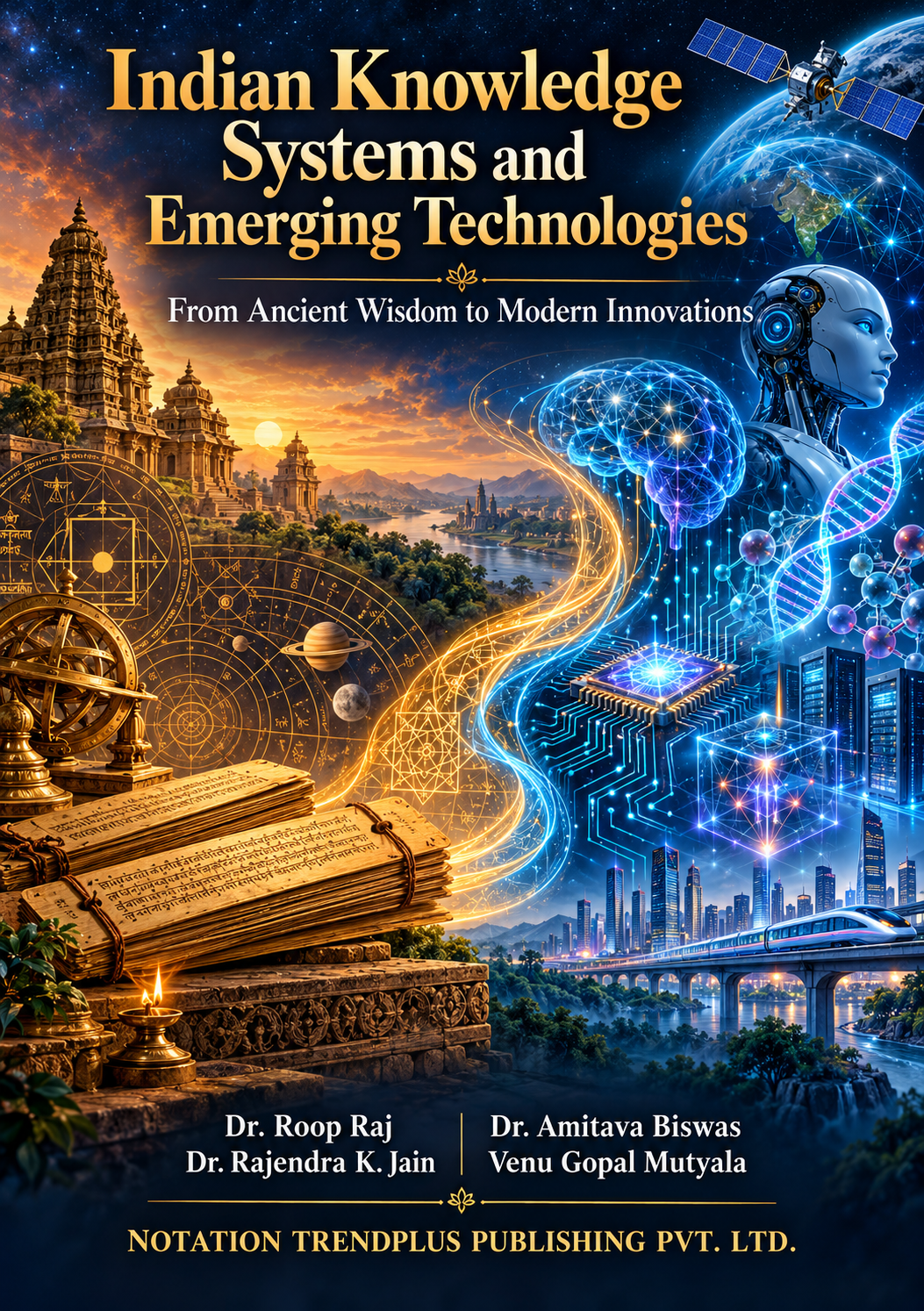
The rich intellectual heritage of India has made remarkable contributions to the development of human civilization through its profound understanding of mathematics, astronomy, philosophy, linguistics, medicine, logic, and scientific reasoning. Indian Knowledge Systems (IKS) represent a comprehensive body of traditional knowledge that has evolved over centuries through observation, experimentation, systematic inquiry, and practical experience. In the contemporary era, the integration of this ancient wisdom with emerging technologies offers new opportunities for innovation, interdisciplinary research, and sustainable development. The book Indian Knowledge Systems and Emerging Technologies: From Ancient Wisdom to Modern Innovations has been developed to provide students, teachers, researchers, and knowledge enthusiasts with a systematic understanding of India’s traditional intellectual contributions and their relevance to modern science and technology. It aims to establish meaningful connections between classical Indian concepts and contemporary developments in artificial intelligence, computational sciences, mathematical modeling, natural language processing, and intelligent systems.
The book begins with an introduction to Indian Knowledge Systems, exploring their historical evolution, philosophical foundations, and traditional methods of knowledge transmission. It subsequently examines Indian epistemology, logical reasoning, mathematical algorithms, numeration systems, and computational thinking. Special attention is given to the contributions of renowned Indian scholars such as Pāṇini, Piṅgala, Āryabhaṭa, Brahmagupta, Bhāskarācārya, and Mādhava, whose intellectual achievements continue to inspire mathematical and computational research. A distinctive feature of this book is its interdisciplinary approach to understanding the relationship between traditional knowledge and emerging technological applications. Topics such as Pāṇinian grammar and natural language processing, Nyāya reasoning and knowledge representation, ancient mathematical algorithms and modern computing, and traditional logical frameworks and artificial intelligence are presented to encourage critical thinking and conceptual understanding.
The content has been organized in a student-friendly manner, with clearly defined chapter learning objectives, systematically numbered sections, relevant illustrations, chapter summaries, learning outcomes, multiple-choice questions, and descriptive review questions. These features are intended to facilitate independent learning, classroom teaching, examination preparation, and further academic exploration.
It is sincerely hoped that this book will inspire readers to explore the scientific and philosophical richness of Indian Knowledge Systems and recognize their potential contributions to modern innovation, responsible technological development, and the advancement of human knowledge.
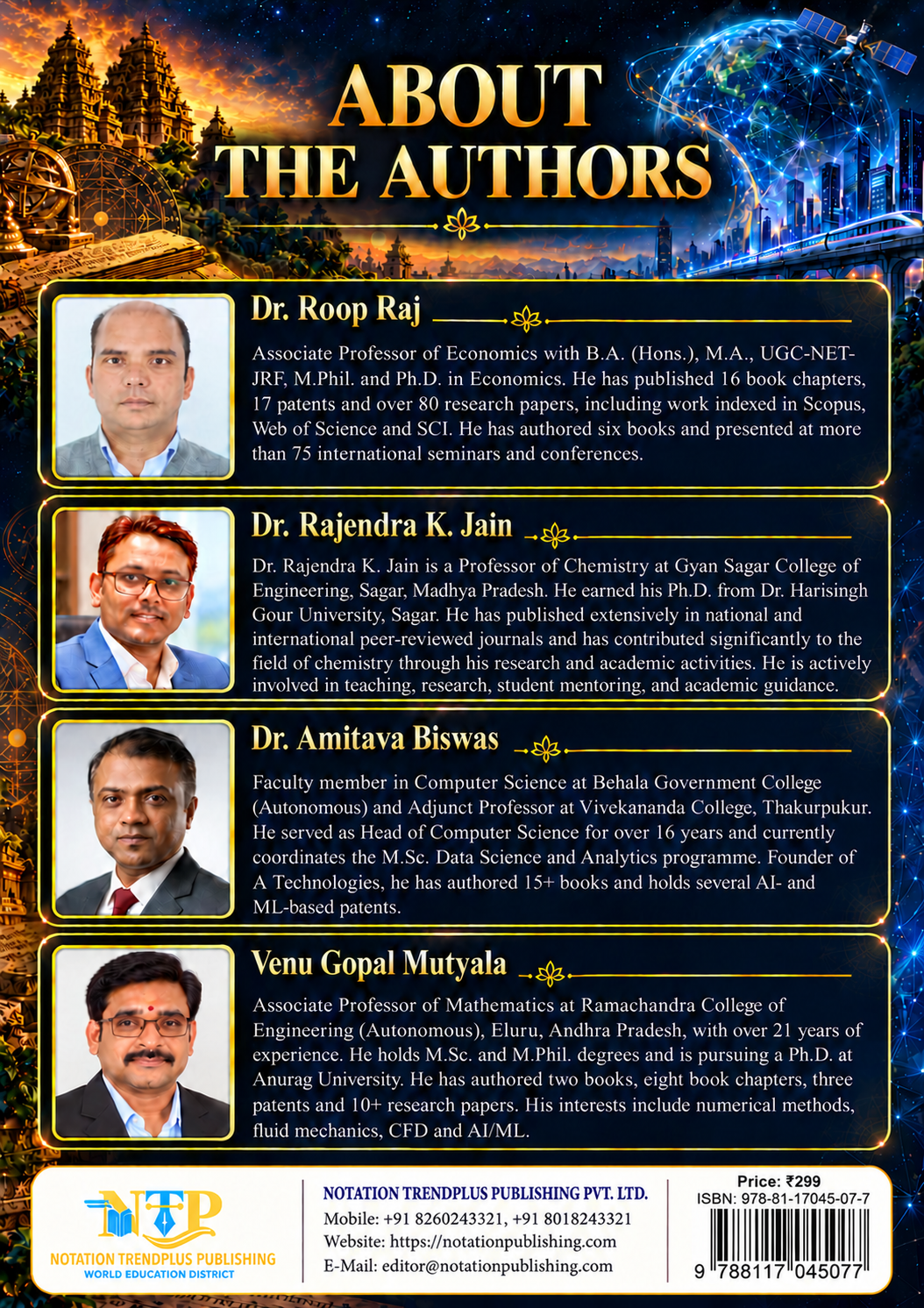
Authors
Dr. Roop Raj
Dr. Rajendra K. Jain
Dr. Amitava Biswas
Venu Gopal Mutyala
Reviews
There are no reviews yet.